

Do you find yourself practically playing a game of Tetris to fit all of your groceries into your refrigerator? Whether you have a smaller fridge or just more refrigerated items than you know what to do with, don’t stress.
There are ways to create more space to make room for everything that needs to be refrigerated. Start with these fridge organization hacks, and read on for the best places to store everything inside your refrigerator:
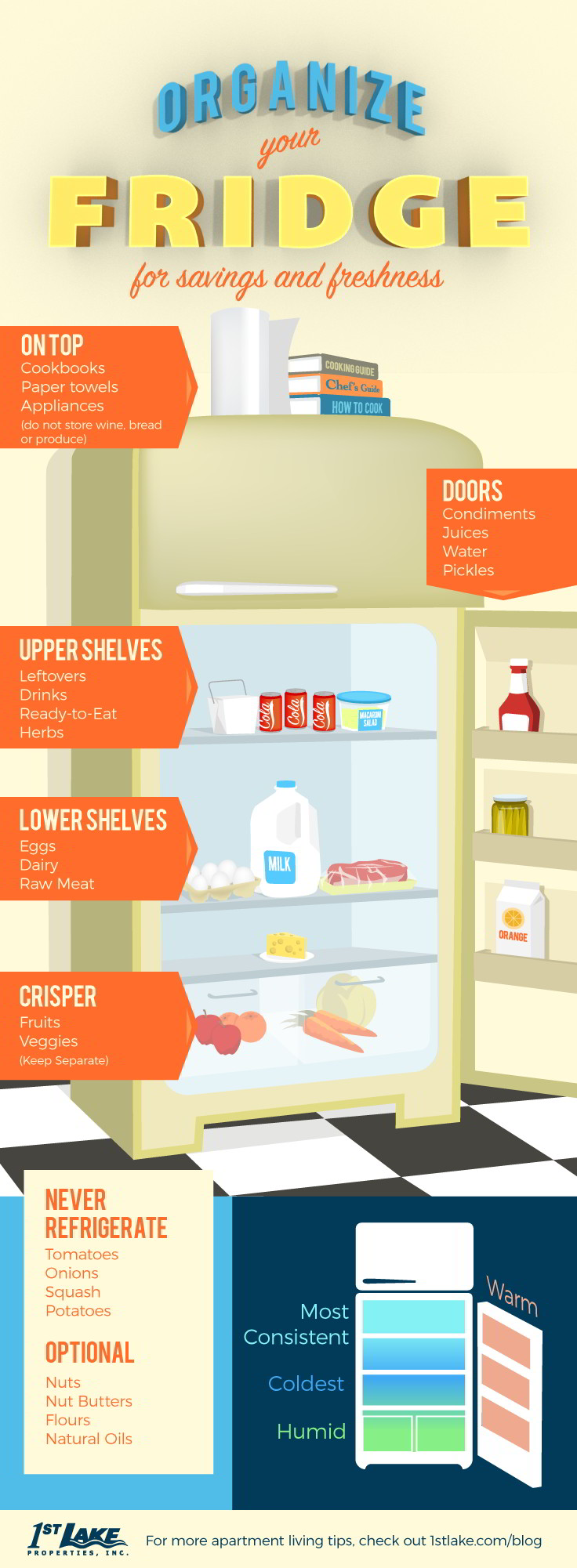
There are ways to create more space to make room for everything that needs to be refrigerated. Start with these fridge organization hacks, and read on for the best places to store everything inside your refrigerator.
This is a quick and easy fix for products that are taking up more room than necessary. Many products like rice or prepared food come sealed in a bag inside a large, bulky box. By eliminating the packaging, less space will be needed to store the item in the refrigerator.
Chances are, you have a lot of products that have been sitting in your refrigerator, neglected for a long period of time. Most likely these items include salad dressing and condiments, wilting produce, half-empty bottles of flat soda, frozen popsicles or prepared meals, just to name a few. Make a habit of routinely cleaning out your fridge to throw out the items that have expired or spoiled.
To keep the surfaces of your refrigerator clean, lay down some easily removable cling film on each shelf of your refrigerator to catch spills and crumbs, and remove them and replace as needed.
Smartly utilize your refrigerator space by separating different types of food in designated baskets, like condiments, greens, dairy, fruit and meat. Label the containers to keep to a consistent system going and for quick and easy access.
Did you know that there is a correct method for organizing your fridge and making the most out of your groceries? Follow these tips to maximize your food’s freshness and save money in the process!
Store things like cookbooks, paper towels and appliances on top of your fridge. NEVER store bread, wine or produce on top of your refrigerator.
The door is the warmest part of your fridge, so use it to store products that aren’t as sensitive to temperature, such as confinements and sauces, juice, pickles, sodas and bottled water.
The upper shelves of your fridge have a consistent cold temperature perfect for storing leftovers, drinks, ready-to-eat prepared foods and herbs.
The lower shelves of your refrigerator are the coldest part of your fridge, which makes them ideal for keeping your milk, eggs, dairy products and raw meat safe.
Your refrigerator has two crisper drawers for a reason. These are made for storing fruits and vegetables separately.
There are certain things you NEVER want to refrigerate, including tomatoes, onions, squash and potatoes.
Many items in your kitchen pantry can be stored in your fridge if you prefer, like nuts, peanut butter and almond butter, flour and natural oils. Some medications and beauty products are also best when refrigerated.
1st Lake Properties offers spacious kitchens with modern appliances at our many convenient New Orleans area apartments that will make refrigerator organization a breeze.
If you’ve just moved into a new place, first things first: check out our First Apartment Essentials list and Moving Checklist. After you’ve sifted through these resources, your next step is decidedly more fun – it’s time to decorate! With the holidays coming up, we’ve put together a gift guide on what to buy for your first apartment. Share it with family members or use it yourself to help create a chic, inviting space at home.
Pretty storage. Ask for unique pieces like a monogrammed tray, hooks, or a small side table so you have somewhere to place your keys and mail as soon as you walk in the door. Attractive storage helps alleviate clutter and create a streamlined – yet decorative – look.
An area rug. Bringing color and comfort to your space is as easy as purchasing an area rug. Choose a neutral color scheme or pick a bright hue that complements your existing decor.
Artwork. Framed artwork instantly pulls your space together. Look for one oversized piece, or hang several together in a gallery-style arrangement.
Mirrors. Similar to artwork, mirrors provide that extra decorative pop on walls. The bonus? They’re much easier to gift than artwork – no mulling over which print to pick out or whether to choose something traditional or modern! Mirrors also maximize space by reflecting light, doubling their impact on a blank wall. Ask for a hanging mirror or a jumbo-sized one to lean casually against a wall (you may want to mount it for extra security, especially if you have pets or small children).
Throw pillows. Pillows are an easy way to add bright pops of color and texture; they can easily change the whole look of your couch or other upholstered items. As local interior designer Whitney Jones shared with us, “Pillows are a really good way to update a space and make an apartment look totally different without spending too much money.” Anthropologie, West Elm, and Target all have a wide selection of beautiful throw pillows.
Bedding. High thread counts are extra-sumptuous but can be pricey. Asking for high-end bedding as a gift helps cover the cost and treat yourself to something you’ll use every single night.
Throw pillows. For all the awesome reasons why, scroll up to the “For the Living Room” section!
A blender. You can find them for $20, but when you have to replace them over and over, is it really worth the deal? Ask for a nice, name-brand blender, and you’ll be making smoothies and milkshakes for years to come.
Pans. Quality is key here. Non-stick saute pans from brands like Calphalon are expensive but will last and last. You can also look for a black steel skillet, which combines facets of cast iron and stainless steel into one seamless piece.
Knives. Just like pans, quality determines price. Extra-sharp knives do the work for you, tackling laborious kitchen tasks like chopping and cutting with ease. A chef’s knife and a serrated knife should cover most of your needs.
A small kitchen inside a one bedroom, studio or even a bigger unit that’s lacking proportion can pose a challenge. Making meals for one can also present a predicament. But don’t let a modest-sized kitchen, single occupancy or both deter you from cooking delicious and healthy meals. It can be done! Here are a few tips to guide you through cooking in your apartment.
Even the tiniest kitchens can be optimized!
Restrictions are always a drag, but they also allow for creative solutions. One of the most useful tips to follow is to utilize your wall space. Instead of crowding your counters with appliances, install metal shelves and stock them with all your spices, kettles, cookbooks and small appliances. For additional organization, stack dividers like wooden or plastic boxes on the shelves filled with all your kitchen wares.
With all the space that an oven and refrigerator can take up, there can be little left for the rest of your equipment. Keep in mind smaller, nifty items that can replace more heavy duty commercial machinery. Some of these brilliant culinary creations include a slow cooker that can replace giant pots of soup or stewed meats, a mini-food processor and a hand-held mixer.
There are a few rules of thumb to follow if you plan on just cooking for yourself. First, if you plan on purchasing produce, make sure that you get seasonal vegetables that won’t rot in 24-48 hours and store them properly. For produce that isn’t seasonal, there’s nothing wrong with getting it in canned form, like canned tomatoes or canned beans.
Use small cooking dishes for portion control. If you’re roasting something or making a casserole, use a small pan or dish to cook it in. That way you’re not left with a ton of leftovers that will just end up in the trash can. If you do want meals to stretch throughout the week, cook dishes that easily reheat, like soup or pasta.
Breakfast for dinner! An eggcellent option for cooking for one is to make a scramble of eggs, roasted veggies and goat cheese with a side of wheat toast, or any other dish involving eggs. Organic, farm fresh eggs will keep for a decent amount of time in the fridge, and can turn into a hearty, tasty meal.
1st Lake Properties | P. O. Box 73709 | Metairie, LA 70033 | info@1stlake.com


